

Ebay Monetization - 2025
Improving Price Transparency in eBay Offers
Making negotiations clearer and more trustworthy after the launch of the buyer protection fee.

Ebay’s Challenge
When eBay introduced the buyer protection fee in the UK, buyers and sellers started seeing different prices in the same negotiation. Buyers saw the all-in price. Sellers saw only the item price. Neither knew what the other was seeing. Both felt cheated.
“When I make offers, the seller says they will accept £6 but when I offer £6 the actual amount the seller gets is a lot less than £6 so they refuse. There is no way of telling what £6 is aside from buyer protection... I don’t think this business with insurance and no fees and money the seller gets has been communicated across correctly.”
“It’s so confusing. When I received the offer I thought I would get the whole amount. But when the buyer paid you deducted the buyer protection fee from my final offer. It shouldn’t work like this. The buyer should pay extra for buyer protection and I should receive the full amount like £10 without seeing how much the buyer actually pays.”
The Opportunity
Price confusion in a negotiation isn't a display bug - it's a trust problem. When buyers and sellers can't agree on what a number means, deals fall apart and neither side knows why. The goal wasn't just to fix the UI. It was to give both sides enough clarity to negotiate with confidence, and recover CSAT and offer acceptance rates in the process.
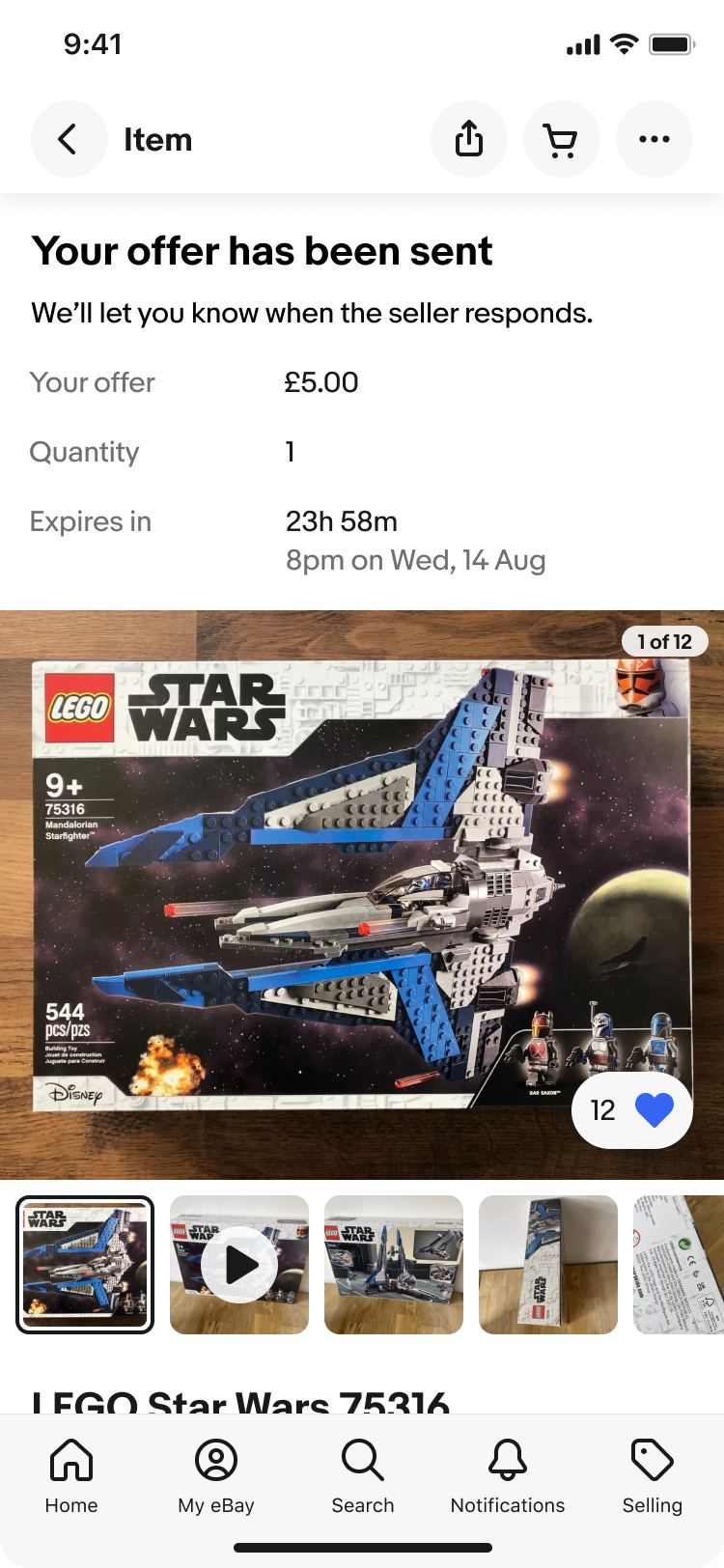
What buyers see
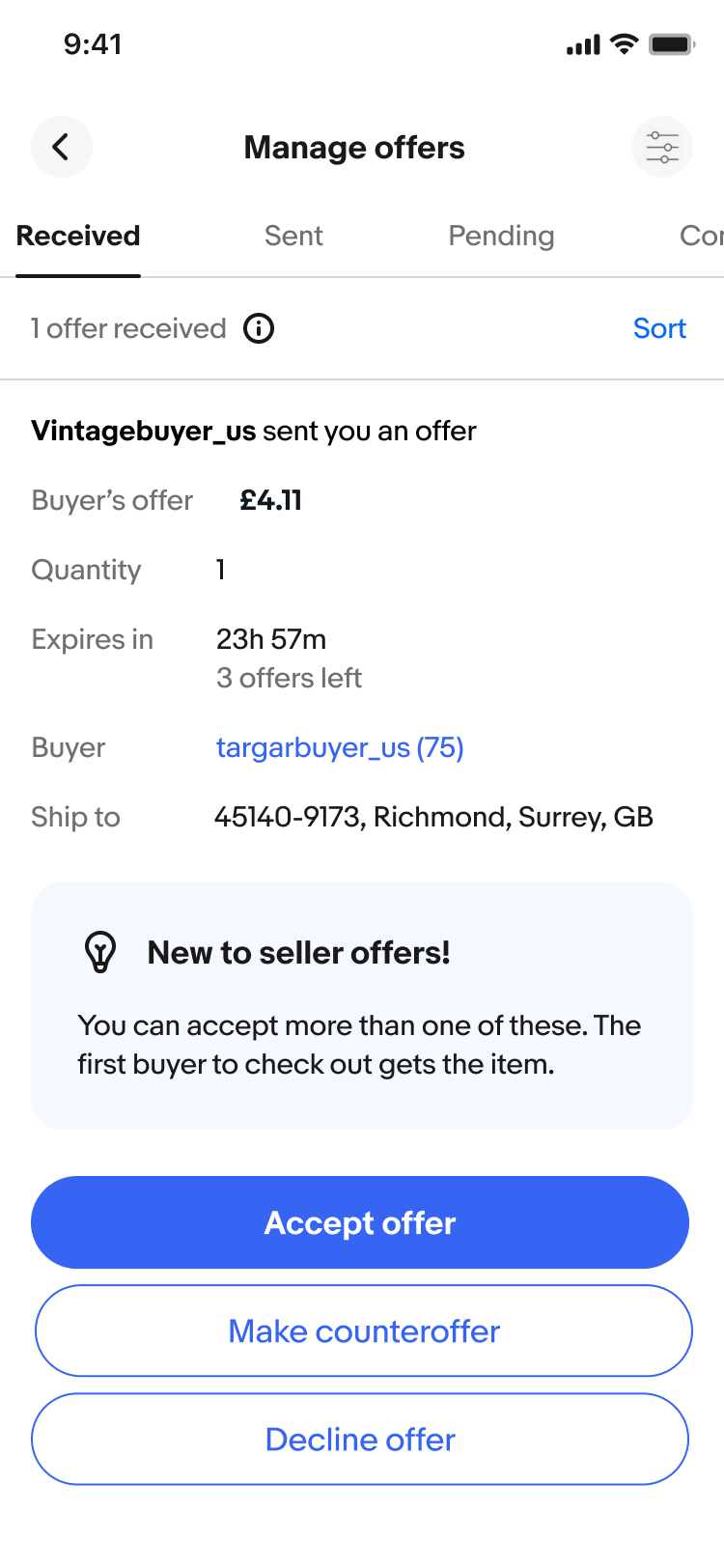
What sellers see
My Role & Approach
I was the lead designer on the Monetization team. This was a complex environment: 50+ stakeholders, 5 cross-functional teams, and a project that went through 4 rounds of LT and ELT review. My job was to hold the design direction together while the scope shifted around it, partnering with research, data science, legal, and engineering to find what we could actually ship that would still move the needle.
Audit & Opportunity

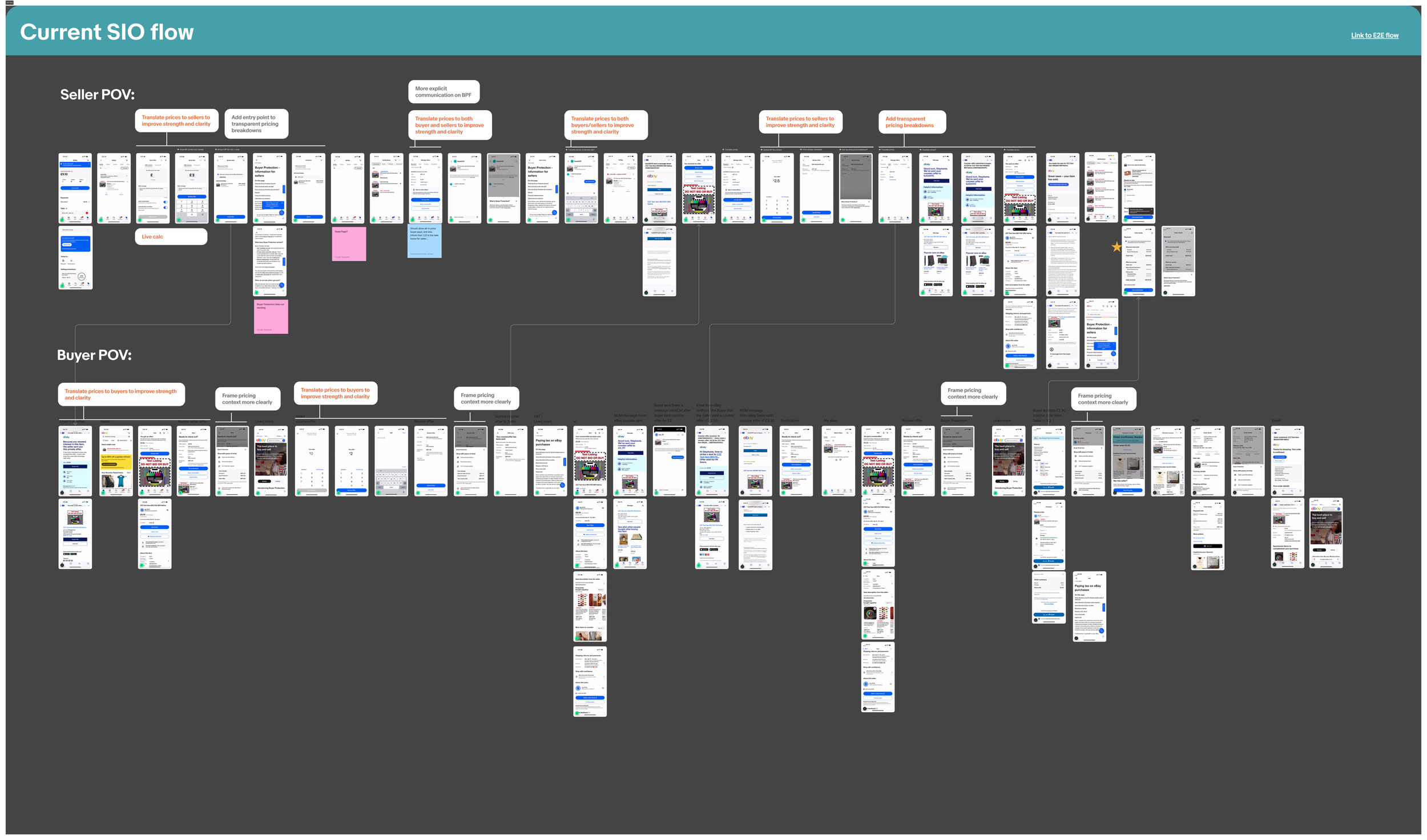
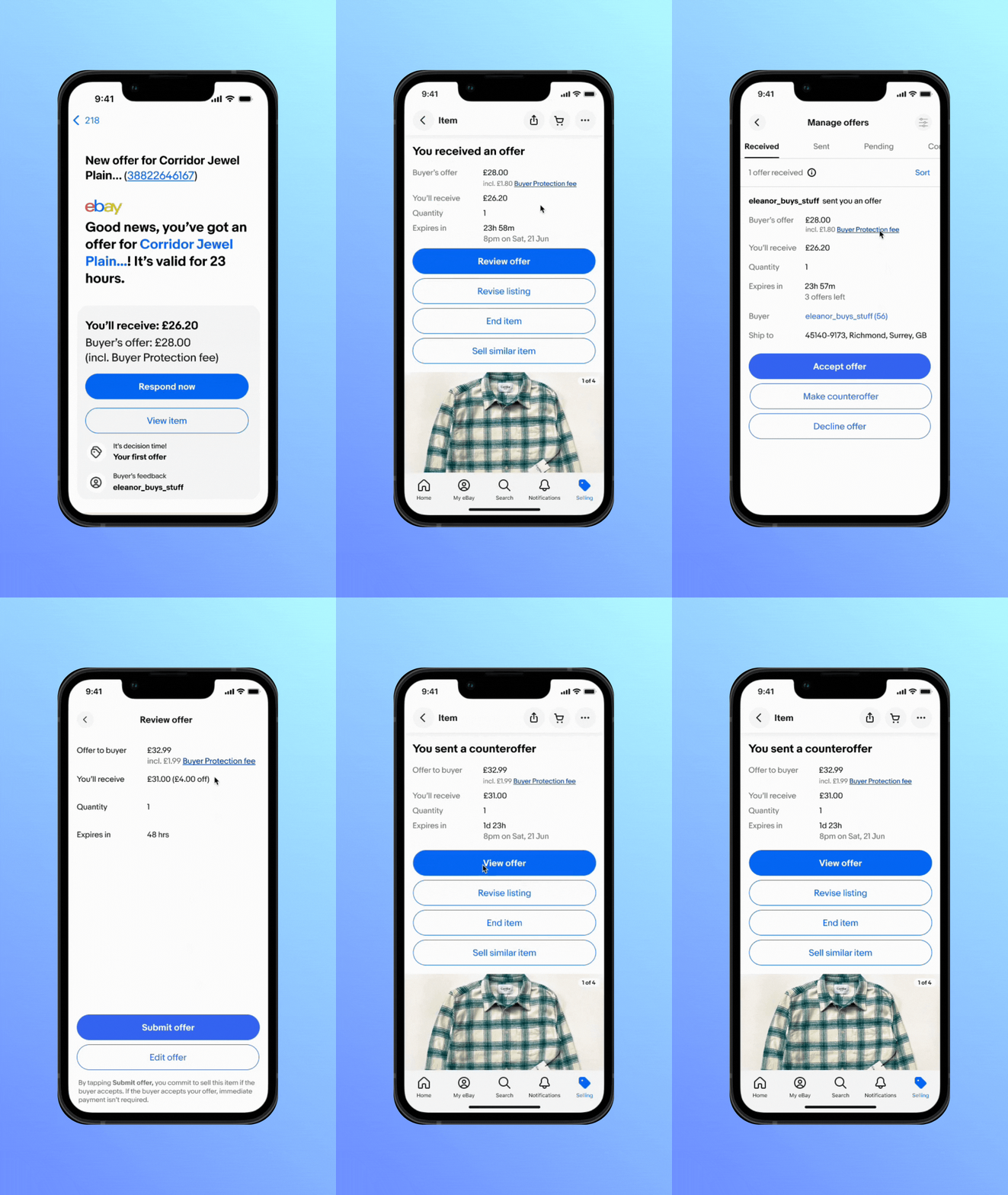
Solutions

What drove the decisions
Five rounds of research. Four ELT reviews. Multiple iterations. Here's what actually changed the work.
We designed for sellers, not both, and it was the right call.
We started with the full picture: a buyer experience and a seller experience, designed in parallel. Both users were confused. Both deserved clarity. That was the right instinct.
Then ELT pushed back. The concern wasn't transparency, it was scope and risk. And as we worked through the feedback, something clicked. Sellers are the ones making every decision in this negotiation. They set the price. They accept or decline. Buyers can only respond.
So we focused on sellers. Not just because we had to, but because they were the right leverage point. Give sellers the information they need to price with confidence, and the whole offer flow gets healthier. Buyer-side clarity becomes the natural next step.
That reframe changed what we built.

Original design direction

Revised design direction
Consistency price language builds confidence.
Research kept surfacing the same thing: users didn't trust prices that changed between screens. If the number looked different in the app versus on web, people assumed something was wrong, or that they were being misled.
We worked with legal to build a pricing language that held across platforms. Same labels. Same format. Same hierarchy. It sounds simple. It took months.

Consistent Price Transparency Across Platforms

The simplest version of the fee calculator won.
We pushed hard for a live calculator, and something that updated in real-time as sellers typed, so they could see their take-home amount change with every keystroke. It tested well. Sellers loved the concept.
Then we hit technical constraints. Real-time calculation at eBay's scale introduced latency that made the experience feel broken rather than helpful. We built multiple versions trying to solve it. In the end, the simplest one won: a clean price translation that showed sellers what they'd receive before they committed.
Less dynamic than what we imagined. More trustworthy than any version we tested.


Scope of work
Aligned
50 stakeholders, 5 cross-functional teams
Collaborated
10+ working sessions with Legal & Compliance
Reviewed
4 rounds of LT & ELT executive reviews.
Impact on the business
17%
YoY GMV Lift
76%
Neutral & Positive Mentions
19%
Increase in Offer Acceptance Rate
10%
Decrease in Offer Decline Rate