

Dropbox Growth
Dropbox Growth Acquisition - 2023
How I helped Dropbox evolve from a single-product company to a multiproduct platform — and drove $5M+ in measurable revenue impact doing it.
The Problem
Dropbox's growth had slowed to under 2% year-over-year. The company had acquired HelloSign and DocSend, but users still thought of Dropbox as a cloud storage tool. Nobody knew about the new products. The marketing site wasn't helping.
There was no framework for how to tell the multiproduct story, not on the homepage, not on product pages, not in the conversion flows that millions of users moved through every day.
The Opportunity
Not a messaging problem. A design problem. Users weren't discovering new products because nothing on the site showed them the ecosystem existed. The goal: build a scalable framework that could introduce Dropbox's full product suite without disrupting the conversion flows that were already working.
Primary metric: Basic sign-up growth.
My Role
I was the product designer on the Growth team, responsible for end-to-end design strategy for this initiative — from defining the framework to launching and iterating on experiments.
Midway through the project, our design lead went on parental leave and consistent direction from leadership became hard to come by. I kept things moving: weekly syncs, clear decision paths, a prioritized experiment roadmap built with data science. We shipped. We kept learning.
The Framework:
Central / Satellite / Exit
Before designing anything, I needed a model for how multiproduct awareness would flow across the site.
Central Station:
Homepage, /business
awareness & discovery
Central Station:
/docsend, /hellosign
education and depth
Central Station:
/plans
Every experiment we ran mapped back to this model. It gave the team a shared language and made it easier to prioritize what to build next.
conversion
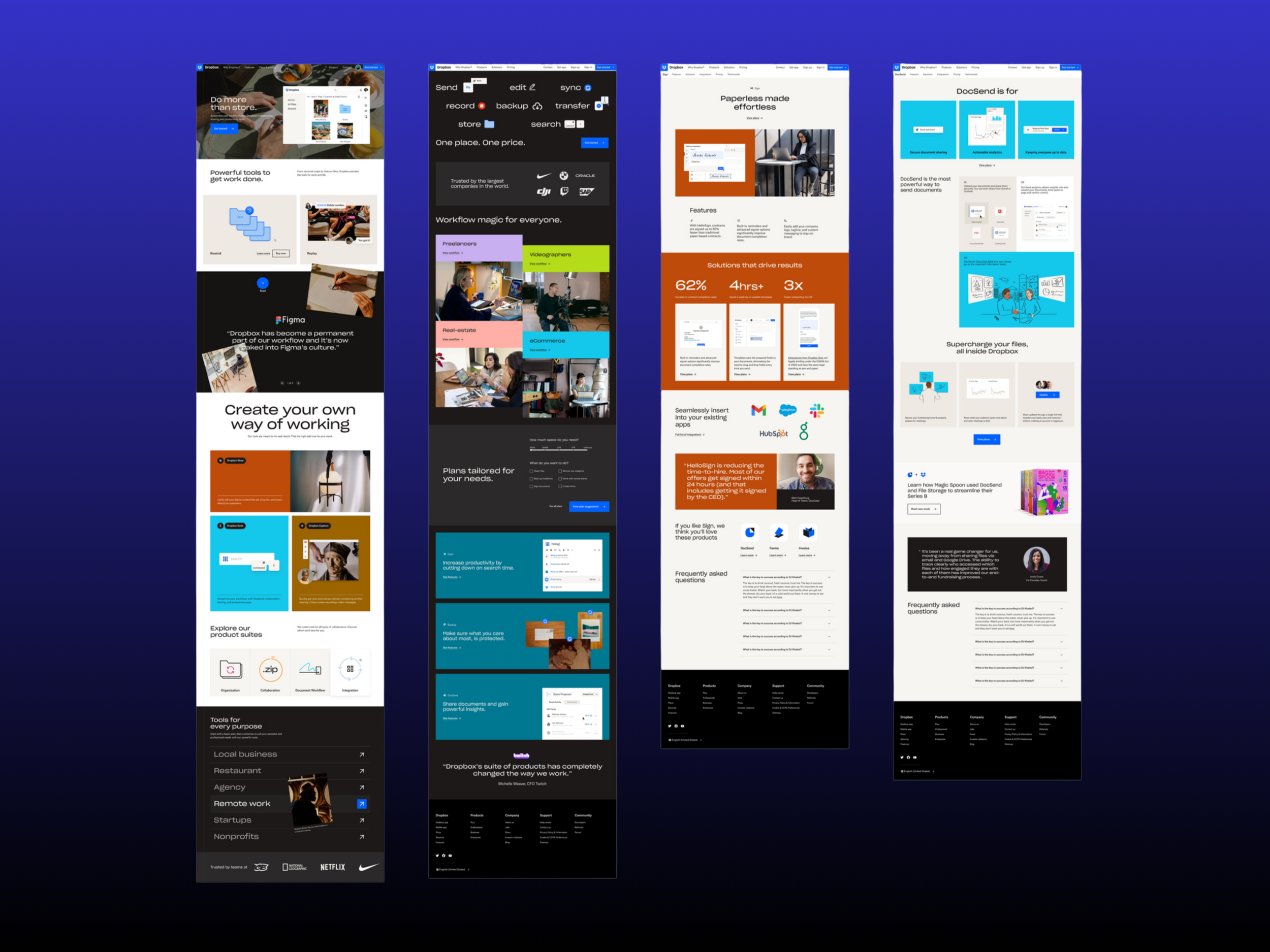
Exploring What’s Possible
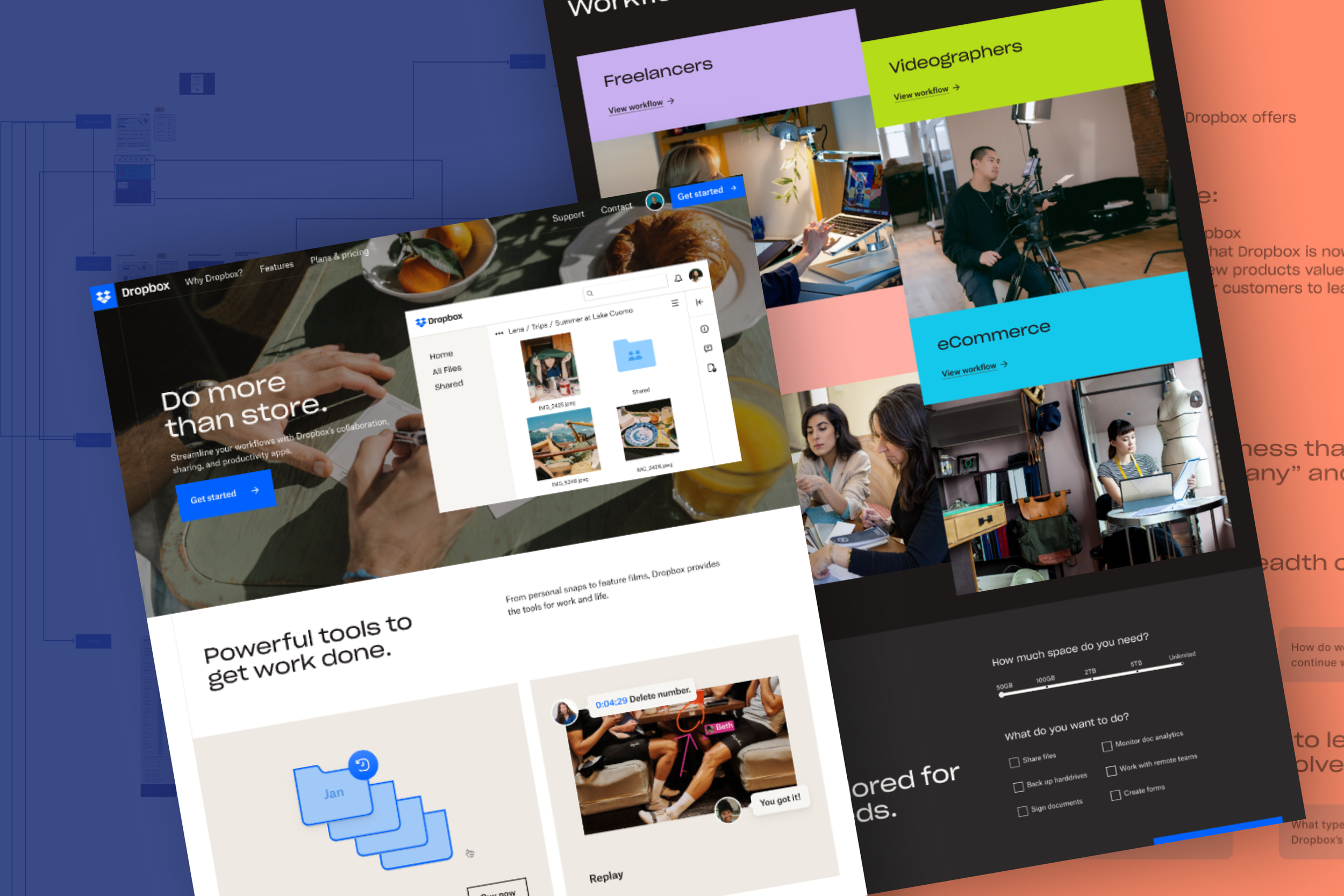
Before converging, I explored four directions for how Dropbox could tell a multiproduct story. These concepts set the creative range, from editorial storytelling to utility-first layouts, before we moved into experiments.
Small surface area. Real revenue impact
Each experiment was designed to ship fast and measure quickly — built from existing components, launched on high-traffic surfaces, and tied directly to Basic sign-up growth. Small bets, but the right ones.
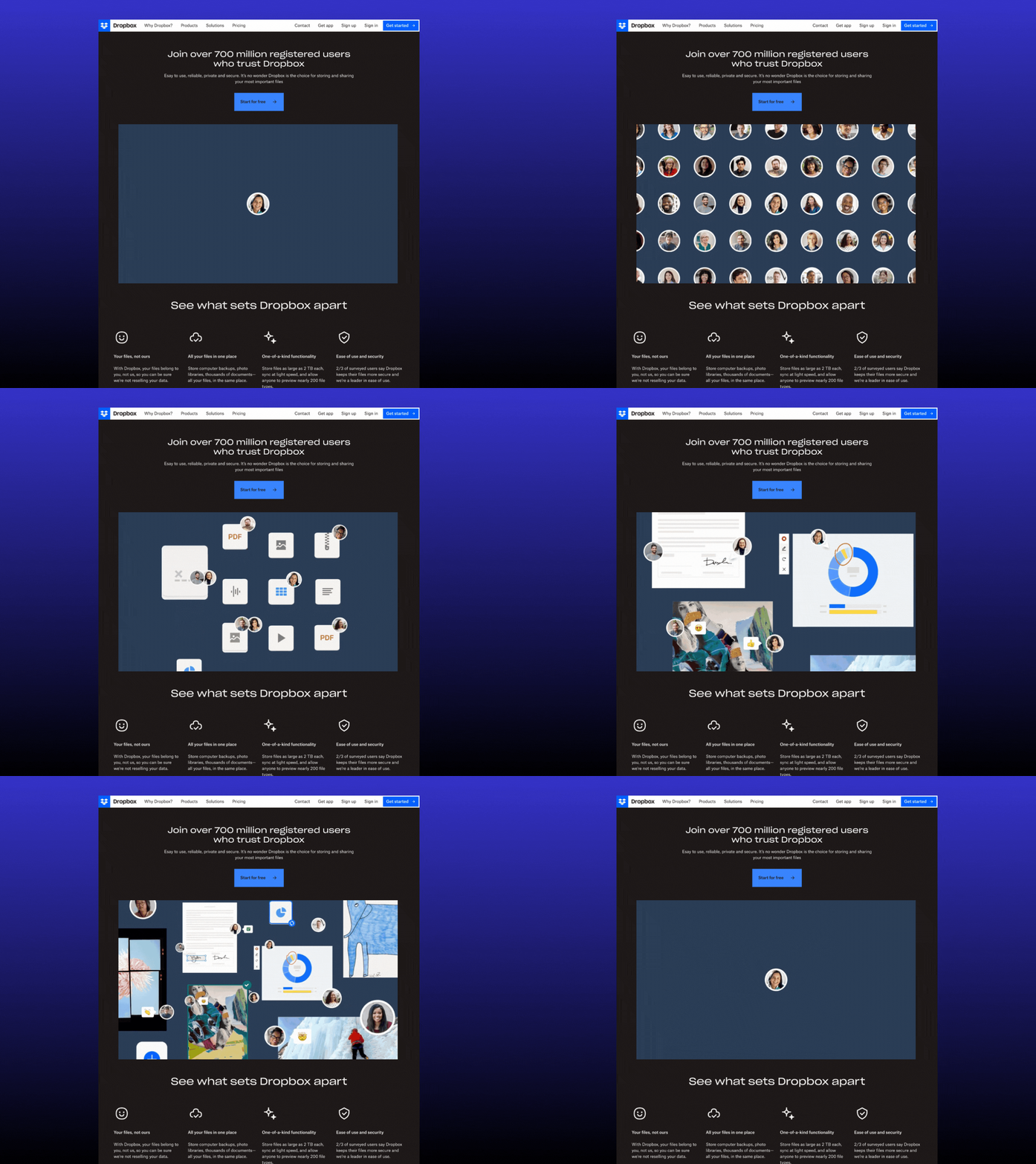
An animated intro on the homepage that explained how Dropbox, HelloSign, and DocSend work together - visually, not through copy. Made the homepage more informative without adding cognitive load.
Ecosystem Hero Module
Results*
+5.7%
Adjusted annualized recurring revenue
+2.4%
Adjusted LTV
2.5M+
Annualize revenue lift
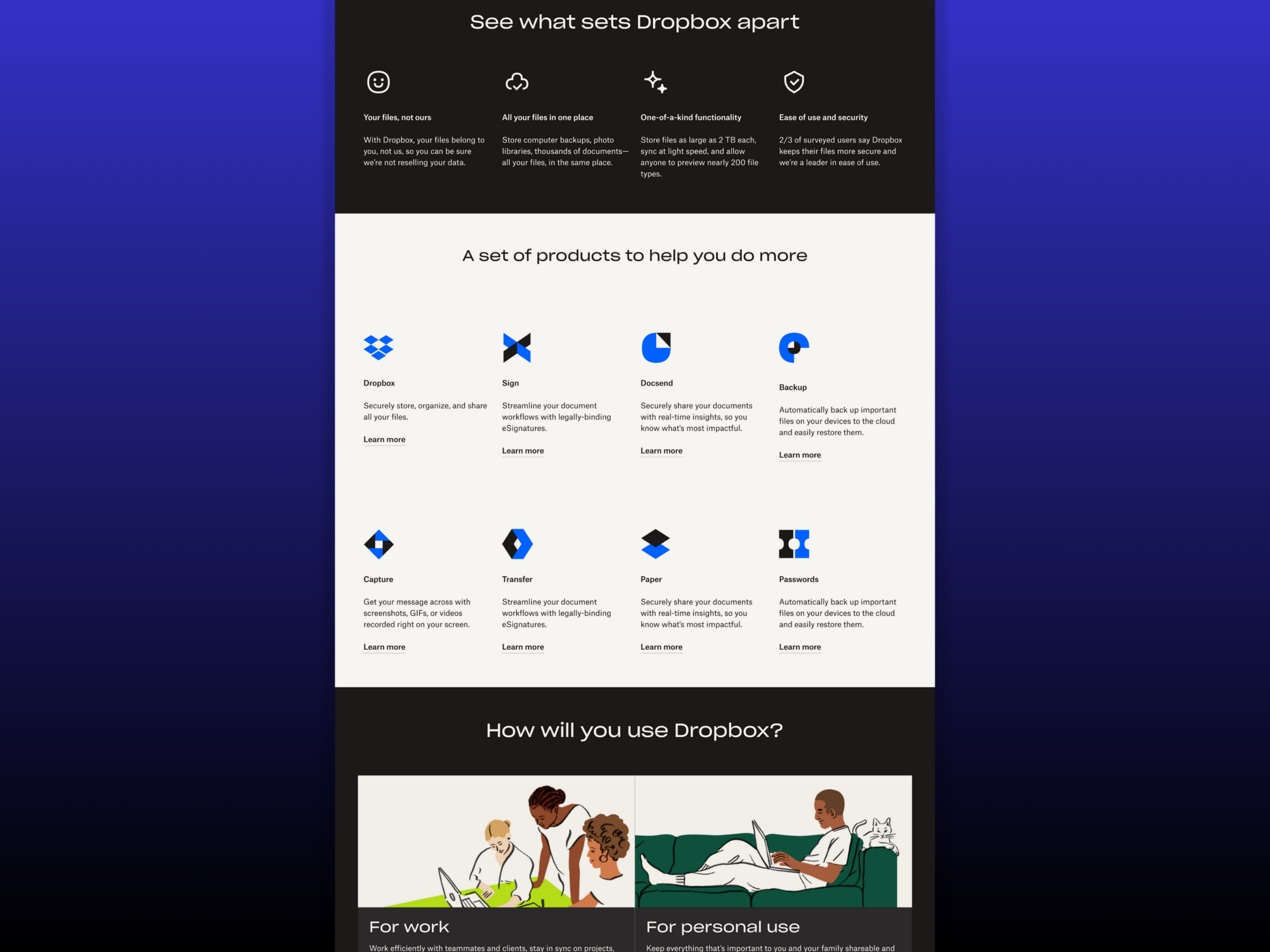
A lightweight homepage module showing all key products using existing design system components. Fast to build, fast to test.
Multiproduct Exposure Module
Results
1.8M+
Incremental GNARR
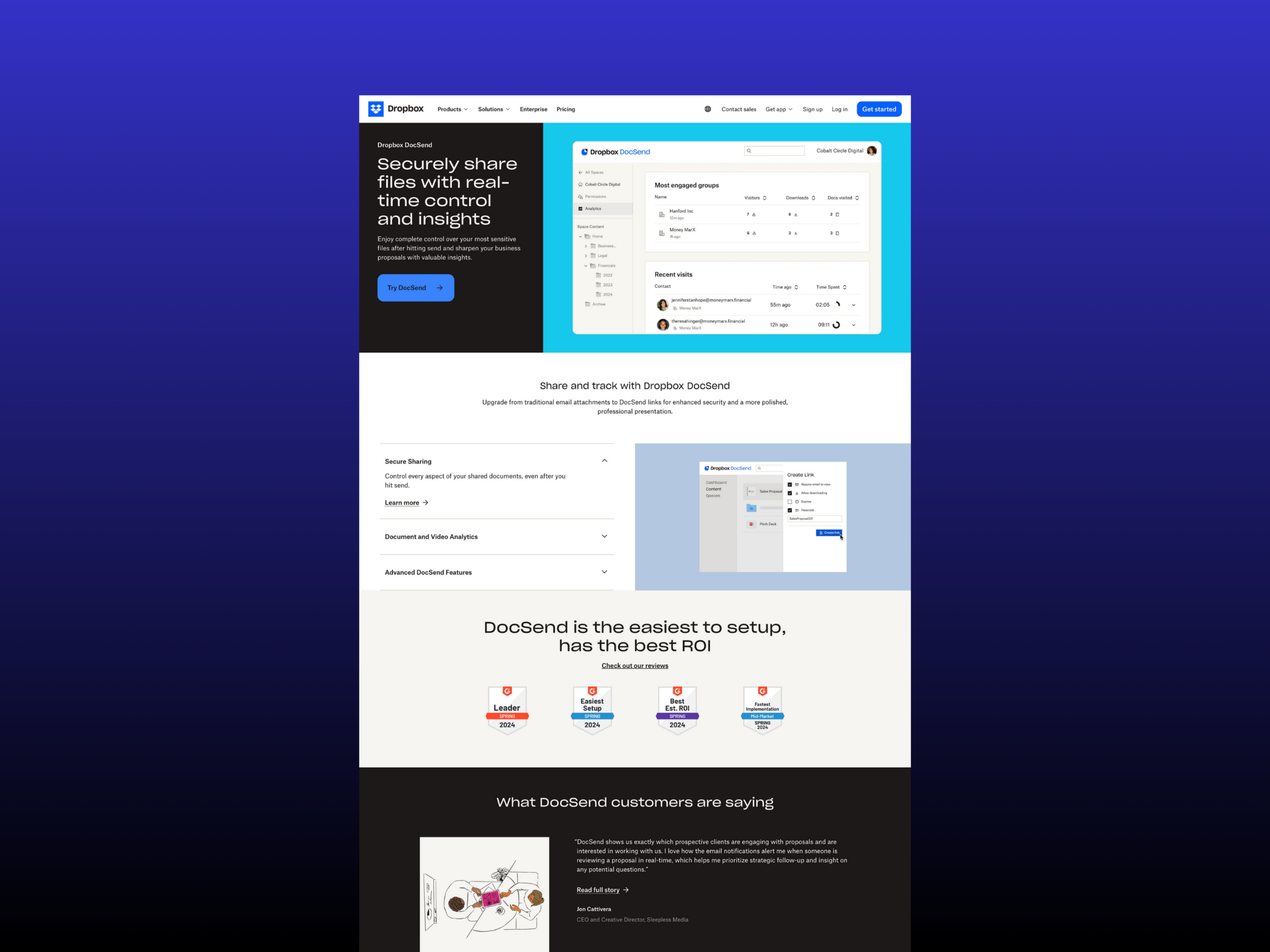
Users had to leave Dropbox to learn about HelloSign and DocSend. I designed lightweight landing pages inside the product to close that gap.
MVP Product Landing Pages
Results
+25%
in Product exploration
+10%
CTR to Try and Learn more
What it took to ship
This wasn't a small initiative. Three types of constraints, all at once.
Technical: Building within an existing design system while pushing animation and motion storytelling
Legal: Every pricing display required compliance review
Organizational: No design lead for a significant stretch, 5 cross-functional teams, decisions that needed to hold across multiple stakeholders
Impact on the business
2.3%
LTV Lift
1.8M
from multiproduct experiments
5.7%
GNARR Lift
1.3M
from new product pages